Skip to content

Amish go solar

holmescountyamishbuggy.jpg
The technology use & decisions of the Amish are fascinating. It seems that in some places the Amish are adopting solar electricity on a large scale. Generators and windmills are giving way to solar panels. In Holmes County, Ohio, ca. 80% of the Amish families have solar panels. And when the power grid goes down – well, they are not connected.

“The Amish appear to have skipped the 20th century in a sense,” said Bill Spratley, executive director of Green Energy Ohio, a nonprofit that promotes renewable energy.

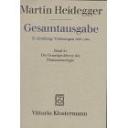
Heidegger’s GA

heid_ga.jpg

The volumes of Heidegger’s Gesamtausgabe look good. The paper is of high quality, typesetting consistent & careful, a well-known publisher – Klostermann – on the job. I never really even thought about the quality of the editions, assuming that everything is tip-top. So it was something of a surprise to notice that Theodore Kisiel has written an article called “Heidegger’s Gesamtausgabe: An International Scandal of Scholarship,” [Philosophy Today 39:1 (Spring 1995): 3–15]

I read the article yesterday, and am quite amazed. There seem to be several problems with the GA and its editing process.

Heideggers Nachlass is in the hands of the family, and the family runs the publication of tha GA. Heidegger was working with von Herrmann on a set of guidelines for editing and publishing his work, but this work was left incomplete. In addition to the unfinished guidelines there exists, Kisiel tells us, a one-page hand-written set of instructions by Heidegger. The problem is that while the editors and translators are given directives based on these two documents, the documents themselves have not been made public. This, Kisiel insists, gives the family free hands to change the directives, even arbitrarily. I do agree that, for instance, the rules that forbid an interpretive foreword or translators’ index are quite counterproductive.

The biggest trouble seems to be the policy that the volumes of the GA are given as “editions of the last hand”, Ausgabe letzter Hand. This means that they are published in the appearance that Heidegger last left them. So, for instance, if there is a manuscript with later corrections, deletions and additions, it is published with them (the last of those, in case of different strata) without any indication that parts of the text may be from different times, sometimes even years apart.

The example Kisiel mentions (p. 5) concerns Sein und Zeit. The lectures of the summer 1925 are, in essence, a draft of SuZ. In the published GA volume of the lectures, we find the crucial term Existenz and its derivatives. Likewise in SuZ. But it turns out that all the instancs of the term in the published lecture course have been added later by Heidegger – in 1925 he did not use Exiztenz! Existenz pops up in 1926, just in time for the hasty publication in Husserl’s yearbook.

This means that there exists a manuscript (from 1925) for SuZ without any of the terms beginning with Existenz*. Wow. It is interesting to meditate on that for a while.

Kisiel goes on listing the mistakes, errors and problems with the GA, but already the case of the genealogy of SuZ goes to show that the editorial policy does a disservice to serious Heidegger scholarship.

The conclusion is, I’m afraid, that when we read the GA, we do not actually know what we are reading.

I should have known. In translating the Spiegel interview to Finnish I learned that the version in Antwort. Martin Heidegger im Gespräch – the version one, according to the copyright owners, has to use for the translation – is different from the interview published in Spiegel. Don’t take my word for it – go to the library and check out the Spiegel, it’s worth the while even just for the pictures. Two small sections have been deleted in the Antwort version. (And, according to the policy of “the last hand”, these deletions are not mentioned in Antwort.) Are the deleted sections important? Not very. Are they interesting? Yes. Do they have to do with politics? Yes.

Kisiel finds the family-run operation that relies on unpublished but authorative directives in blatant contrast with the post-modern, open, death-of-the-author times. He suggests (p. 12) a new check for errors and openness, “glasnost”, with regard to the guidelines by von Herrman/Heidegger and Heidegger. While these are good ideas I’m not sure I have such a big problem with the fact that the family is running the publishing, and has not relinquished the rights to, for instance, some public research institution. I don’t think Heidegger himself believed in the public’s (even the academic public’s) right to access over anything it itself deems important; at least I don’t believe in it and even less do I support a right to impose that right from the outside.

If the family decides on an editorial policy, if it changes it, and so on, it is their privilege. It is our privilege as researchers and scholars not to take any text at face value. When it comes to Heidegger’s political engagement – which is one of the big elephants in the room – it is not very hard to read that out from his texts and letters. The politics, too, changes as does the philosophy, for they are intertwined; as Heidegger says in the Spiegel interview, a crucial question for him is – and always was, I feel – “what kind of political system can be given to our technological age”.

Onko tämäkin taidetta, III. Mies söi koiran.

800px-courbet_fox_in_the_snow.jpg
Performanssitaiteilija Mark McGowan söi corgi-rotuisen koiran. Ateria oli protesti kuningasperheen ketunmetsästystä vastaan. Prinssi Philipin taannoisella metsästysreissulla kettua väitetään kohdellun kaltoin, mutta syytteitä ei ole kuulunut.

McGowan on vegaani, joten performanssi ei ollut ihan triviaali. Tiettävästi kuningasperhe ei syö kettuja. Eivät edes perheen corgit.

McGowan sen sijaan on netti-lähteiden mukaan syönyt sekä ketun että joutsenen. Liekö vegaani sittenkään?

Merleau-Ponty ja mehiläiset

Päivitys 29.5.: Salon.comilla hyvä pohdiskeleva keskustelu aiheesta.

bee-luc_viatour.jpg
(Kuva Luc Viatour)

Muistan Merleau-Pontyn nimiin laitetun tarinan tiedemiehestä, joka koetti rakentaa keinotekoisen hiiren. Yritti ja yritti. Vihdoin onnistui. Samaan aikaan laboratorion nurkkaan heitetyistä hylätyistä malleista ja ylijäämäosista itseorganisoitui keinotekoinen norsu, joka talllasi hiiren ja tiedemiehen lyttyyn. Muistanko väärin?

Kertovat maailmalta, Amerikasta ja Englannista, mehiläisten mystisistä kuolemista. Kokonaiset pesät hylättyinä, vain kuningatar ja toukat paikalla, eikä kuolleita misään. Ilmeisesti hajallaan mikä missäkin. Syytä ei tiedetä. Suuri vaara on, että pölyttämättä jäävät kasvit jättävät siementämättä ja niin edelleen.

Nyt spekuloidaan, että syynä voisivat olla kännykät. Kännykkätaajuudet saattavat häiritä mehiläisten suunnistusta. Tiedetään, että ainakin yksittäisten pesien kohdalla vaikutus on olemassa.

Now a limited study at Landau University has found that bees refuse to return to their hives when mobile phones are placed nearby. Dr Jochen Kuhn, who carried it out, said this could provide a “hint” to a possible cause.

Tiede ei ajattele?

Organisoidulle keskustelulle vapauttava tuomio

Jos jotakin, niin tilanne menee vielä sekavammaksi.

Digitoday: Käräjäoikeuden mukaan dvd-elokuvalevyissä käytetty suojaustekniikka Content Scrambling System (CSS) on “tehoton”. Päätös on Euroopan ensimmäinen, jossa otetaan kantaa tekijänoikeuslain viimeisimpään muutokseen, joka kielsi muun muassa “tehokkaiden” kopiosuojausten kiertämisen. Lain mukaan sellaista teoksen teknistä käyttörajoitusta ei saa kiertää, “jolla tavoiteltu suoja saavutetaan.”

Mitään kantaa kysymykseen sananvapaudesta (saako suojauksen kiertämisestä keskustella) ei otettu. Puolustusasianajaja Mikko Välimäki tulkitsee näin:

– Tuomioistuimen tekemiä johtopäätöksiä voidaan soveltaa kaikkialla Euroopassa, koska lain käsite “tehokas” tulee suoraan direktiivistä”. Tekninen suojakeino ei ole tehokas enää sen jälkeen, kun kuka tahansa käyttäjä voi hakea internetistä ohjelmiston, joka ohittaa suojauksen. Luen tuomiota niin, että tulkinta ei riipu teknologiasta. Päätöstä voitaneen siten soveltaa tulevaisuudessa myös mm. Blu-Ray ja hd-dvd -formaattien suojauksiin.

Mutta kuten keskustelussa on jo huomautettu, mistä tavallinen taariainen tietää onko suojas tehokas vai tehoton? Jos kiertovälineeen löytää ilmaiseksi netistä on suojaus tehoton? Vai?

Self-organisation/Counter-economic strategies

superflex-selforg.jpg

Just noticed that this book initiated by the Danish artist group Superflex has come out.

Here’s a description by the publisher:

The book Self-organisation / counter-economic strategies was initiated by the artists’ group Superflex, but it is not about them. It is about the many approaches to the creation, dissemination and maintenance of alternative models for social and economic organisation, and the practical and theoretical implications, consequences and possibilities of these self-organised structures. The counter-economic strategies presented here are alternatives to classical capitalist economic organisation that exploit, or have been produced by, the existing global economic system.

My paper in the book is on the future(s) of information society(ies). Happy to be published alongside Lawrence Lessig and Susan Kelly, among others.

70

World oil prices rose on Monday as the market saw no end to concerns over tight supplies caused by unrest in key crude producer Nigeria and output disruptions at US refineries, traders said.

Norja pohtii bensiinikäyttöisten autojen myynnin kieltämistä.

Ja suomessakin mietiskellään:

Kansliapäällikkö Pursiainen: Yksityisautoilua joudutaan rajoittamaan
21.5.2007 8:44

Liikenne- ja viestintäministeriön kansliapäällikkö Harri Pursiaisen mukaan EU:n ajama 20 prosentin leikkaus kasvihuonekaasuihin vaatii ankarampia tekoja kuin yleisesti luullaan. Pursiainen sanoo sunnuntain 20.5. Savon Sanomissa, että myös yksityisautoiluun on puututtava.

Vanha viidakon sanonta: Jos jokin ei riitä ikuisesti, se loppuu.

GLOBAL PERSPECTIVES ON THE RIGHTS OF INDIGENOUS PEOPLES

The Centre for Research on Ethnic Relations and Nationalism (University of Helsinki) and the Ius Gentium Association have the pleasure to invite you to
GLOBAL PERSPECTIVES ON THE RIGHTS OF INDIGENOUS PEOPLES
on 24 May 2007 at 17-20

Venue: University of Helsinki, Porthania (Yliopistonkatu 3), room PII

Programme

17.00-17.15 Coffee
17.15-18.30 “LAST YOIK IN SAAMI FORESTS?” – A video reportage for the UN Introductory comments by Hannu Hyvönen, Director
18.30-20.00 PANEL DISCUSSION
“Consequences of Global Development on the Rights of Indigenous Peoples in Finland and Elsewhere”

Reetta Toivanen, Senior Researcher, Humboldt University of Berlin, and University of Helsinki
Ronald Niezen, Professor, Canada Research Chair in the Comparative Study of Indigenous Rights and Identity, McGill University
Michael Riessler, Researcher, Expert on the Saami movement in Russia, Humboldt University of Berlin

Comments by Janne Saijets, Finnish Saami activist and Jouni Kitti, Finnish Saami activist

Registrations to taru.kuosmanen(at)helsinki.fi.

FREE ADMISSION

WELCOME!

***

Last Yoik on näkemisen arvoinen. Dokumnetoi kipeän hauskasti esimerkiksi taannoisen Greenpeacen ja metsurien leirin kilpalaulannan.

Seppälä Wikipediasta

Juha seppälä ei pahemmin perusta fi.wikipedian “Juha Seppälä”-artikkelista:

Yllä lainattu on minua kirjailijana koskeva Wikipedian ”artikkeli”. Wikipedia-tietosanakirjan sanotaan edustavan open source -pohjaista ”asiantuntijuuden avointa jakamista”. Missään painetussa lähteessä en ole nähnyt yhtä kurjaa ”artikkelia”.

Tähän artikkeliin on kerätty avoimen asiantuntijuuden pohjalta painettujen lähteiden epäolennaisimmat, ulkokohtaisimmat ja yksipuolisimmat kliseet. Painetut lähteet ottavat yleensä luonnehdinnoissaan sentään huomioon tuotantoni (mustan)humoristiset, satiiriset, herkät, rakenteellisesti kokeilevat ja yhteiskuntakriittiset elementit. ”Käsittelee usein synkkiä aiheita kuten itsemurhaa ja kuolemaa”- siinä kaikki.

No, annapa Juha sille vähän aikaa! Muutama kymmenen vuotta, vaikka. Mutta tottta on, että liian voimakkaasti tulkittu “ei alkuperäistä tutkimusta”-politiikka samoin kuin vaatimus väitteiden todennettavuudesta (eli lähteiden käyttämisestä) voivat tehdä pahaa hallaa Wikipedialle, varsinkin ei-luonnontieteellisisssä artikkeleissa. Kukapa viitsisikään kirjoittaa asiantuntevaakaan tulkitsevaa ja kuvailevaa artikkelia Seppälän tuotannosta, jos seurauksena lauma wiki-intoilijoita käy vaatimaan joka lauseen todennettavuutta esim. johonkin tutkimukseen viitaten. Samalla rapistuu myös ajatus, että wikipedia toimisi kollektiivisen asiantutntemuksen perusteella, toinen toistemme artikkeleita parannellen.

Enbuske/Leinonen/Vainio/Rajala Wikipediasta

Tänään Yle Radio 1’ssä Tuomas Enbuske ohjelmoi Wikipediasta, haastateltavina Teemu Leinonen, Niklas Vainio ja Teemu Rajala. Paljon hyviä pointteja. Esim. Teemu L.: opetussuunnitelmat wikeiksi! Niklas: wikipedia ja anarko-liberalismi! Ja Teemu Rajala teki livenä artikkelin Tuomas Enbuskesta.

Podcast löytynee piakkoin.